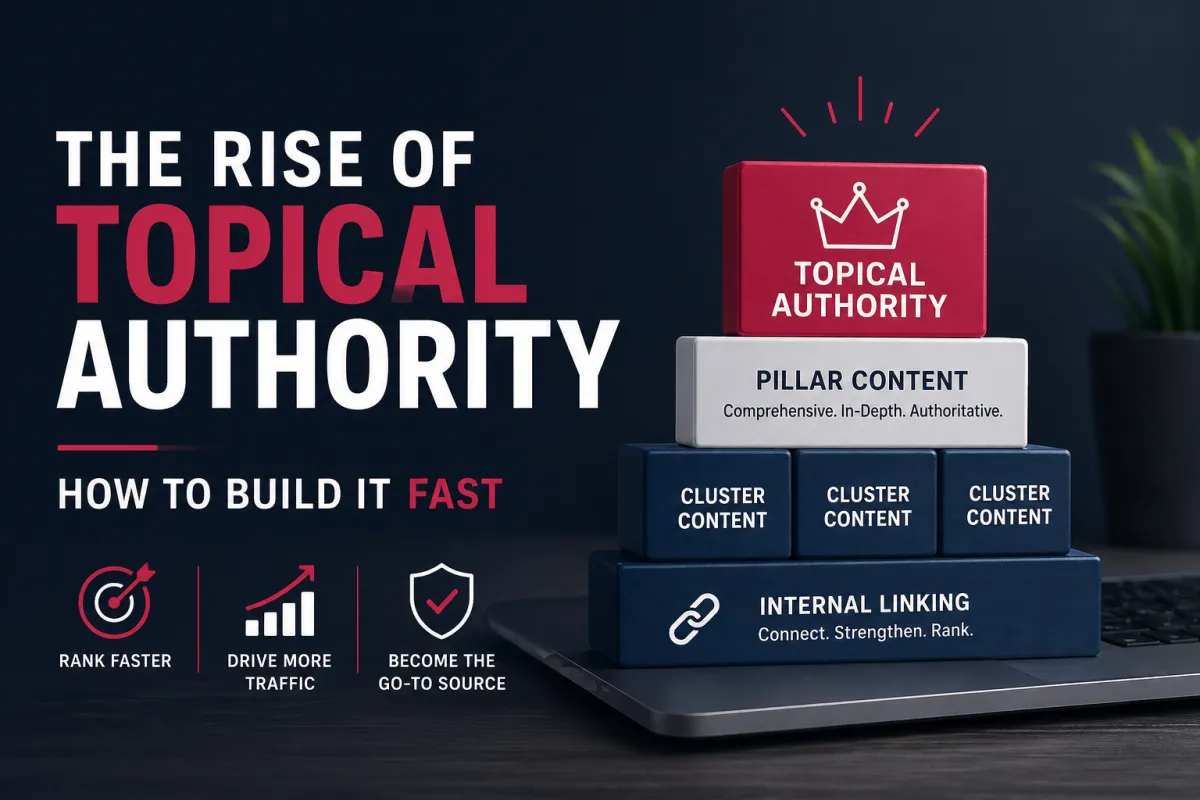
The Rise of Topical Authority: How to Build It Fast
The Rise of Topical Authority: How to Build It Fast
Search engine optimization isn’t what it used to be. Ranking for a single keyword with a single page is no longer enough. Today, Google rewards depth, expertise, and relevance across an entire topic — not just isolated content.
This shift has led to one of the most important SEO strategies today: topical authority.
If your business wants to dominate search results, generate consistent organic traffic, and outperform competitors, understanding how to build topical authority — quickly — is essential.
What Is Topical Authority?
Topical authority is your website’s perceived expertise on a specific subject.
Instead of ranking one page for one keyword, Google evaluates:
How much content you have on a topic
How well your content connects together
Whether you comprehensively answer user intent
In simple terms:
👉 The more complete and interconnected your content is on a topic, the more authority you gain.
Why Topical Authority Matters More Than Ever
Google’s algorithm has evolved. It no longer just asks:
“Is this page relevant?”
It now asks:
“Is this website a trusted source on this entire subject?”
Websites with strong topical authority:
Rank faster for new content
Require fewer backlinks
Dominate entire keyword categories
Build long-term, compounding traffic
For businesses, this means:
👉 Less dependence on paid ads
👉 More predictable lead generation
👉 Stronger brand credibility
The Role of Content Clusters
This is where your secondary keyword comes in: content clusters.
Content clusters are the foundation of topical authority.
What Are Content Clusters?
A content cluster is a structured group of related content built around a central topic.
It typically includes:
Pillar Page – A broad, comprehensive guide
Cluster Content – Supporting articles targeting subtopics
Internal Links – Connecting everything together
Example Structure
Pillar Topic: Topical Authority
Cluster Articles:
What Is Topical Authority in SEO?
How Content Clusters Improve Rankings
Internal Linking Strategies That Work
Keyword Mapping for Authority Building
Common Topical Authority Mistakes
Each article links back to the pillar page — and to each other.
👉 This creates a web of relevance, signaling expertise to search engines.
How to Build Topical Authority Fast
Most businesses take months (or years) to build authority.
But if done strategically, you can accelerate the process significantly.
1. Start With One Core Topic
Don’t try to cover everything at once.
Choose:
One service
One niche
One problem your audience cares about
Example:
Instead of “digital marketing,” focus on:
👉 “Local SEO for small businesses”
2. Map Out Your Content Cluster
Before writing anything, plan your structure.
Create:
1 pillar page
10–20 supporting articles
Focus on:
Questions your audience asks
Long-tail keywords
Problem-solving content
3. Create High-Quality Pillar Content First
Your pillar page should:
Be comprehensive (2,000–4,000+ words)
Cover the topic broadly
Link to all supporting articles
Think of it as:
👉 The “hub” of your authority
4. Publish Supporting Content Rapidly
Speed matters.
Instead of publishing one blog per week:
👉 Publish multiple related articles within a short timeframe
This creates a burst of topical relevance, which Google favors.
5. Use Strategic Internal Linking
Internal linking is what turns content into authority.
Every article should:
Link to the pillar page
Link to 2–3 related articles
Use descriptive anchor text
This helps search engines understand:
👉 How your content connects
👉 Which pages are most important
6. Keep Expanding the Cluster
Once your initial cluster is live:
Add more subtopics
Update existing content
Fill in content gaps
Topical authority isn’t static — it grows over time.
Common Mistakes to Avoid
Many businesses fail at building topical authority because they:
❌ Write random, unrelated blog posts
❌ Ignore internal linking
❌ Target too many topics at once
❌ Focus only on keywords, not user intent
❌ Publish too slowly
The result?
👉 Weak authority signals and poor rankings
How System Management Helps You Build Authority
At System Management, we don’t just create content — we build structured SEO ecosystems designed for growth.
Our approach includes:
Strategic topic selection
Full content cluster planning
High-converting pillar pages
Scalable content production systems
Smart internal linking frameworks
The goal isn’t just traffic — it’s:
👉 Predictable, compounding organic growth
Final Thoughts
Topical authority isn’t a trend — it’s the future of SEO.
Businesses that embrace:
Content clusters
Structured strategy
Consistent publishing
…will outperform competitors who rely on outdated tactics.
If you want faster rankings, stronger visibility, and long-term results:
👉 Stop creating content randomly
👉 Start building authority intentionally
Ready to Build Your Authority?
If you’re serious about scaling your SEO and dominating your niche, System Management can help you implement a proven topical authority strategy — fast.
Let’s turn your website into the go-to resource in your industry.


